Tag Archives: stephanie schlatter

Realism vs. Abstraction: Not So Black-and-White

Standard
bwday1

Day 1

My dad called me the other day.

“Mom showed me your recent drawing on Facebook — my daughter’s got talent!” he exclaimed.

The drawings in question were a response to a “B & W Challenge,” where I was supposed to post a black-and-white photo every day for five days. I desired to really challenge myself, so I opted to do five black-and-white drawings instead of photos. I did these works in a more realistic fashion than my paintings.

When my sweet Papa — who has always encouraged me and always praised my work and meant no harm at all — said this of the drawings, I was a little bummed.

Why? Here’s the secret: I want everyone to know what I did in these drawings was, for me, easier than the work I do with my paintbrush every day. I felt disappointed in my dad’s words because I know most people who have not studied art think, “The more realistic, the more talent.”

Yes, making art that is realistic does take talent, but not imagination, and imagination is hard. Copying from reality is easier than doing a work of art that includes your feelings and personal interpretation and is more abstracted. Say what? Yup, it’s true, and here is why: When I do a realistic work, I am copying what already exists. I look at the photo in front of me and render it. The information is all there. I don’t have to use my imagination at all, just the skills they taught me in art school. Please understand that I’m not saying it doesn’t take skill to work realistically, I’m saying it doesn’t take creativity and imagination. I’m saying it’s a skill that can be taught. Imagination can only be exercised, but not taught.

In college, there were the inevitable people who wanted to skip all the rules and move right into abstraction. I understood this. I, too, admired most painters who abstracted in some way, who were “painterly” in their approach, with a kind of freedom that hyper-realism doesn’t allow for.

But I found quickly the abstract works by students who had not yet learned the rules lacked something; frankly, they lacked a lot. That knowledge goes deeply against that old saying “My kid could do that.” Abstract work done without skill doesn’t show up in your local museum; you can tell the difference. I remember thinking in art school that if I wanted to move into work that was more abstract and expressed more how I felt about something than what a camera might record, I had better learn the rules first. Learn the rules — then break the rules, from a place of knowing.

It is the breaking of the rules that we modern artists spend the rest of our artistic journeys working on. It’s the exploration of ourselves in the backdrop of the idea or scene. The reinterpretation of what exists. What exists is already there; it’s your artistic interpretation that you must invent, and invention is hard.

Thank you for coming along for the ride on this wild journey of artistic exploration; learning the path wouldn’t be the same without you, the viewer. And next time you hear someone say, “My kid could do that,” please do hand them a canvas, paint and brush and invite them to try, while reminding them: “But your child did not do this, and this artist did, after much study and work.”*

Cheers to the artistic process, the breaking of the rules, and the magic you find in between the two.

*Before I sign off, I have to add that when I shared my disappointment and explanation with my dad, a former art student, he said, “I know all that, honey. I love your work — I just liked the surprise of these drawings!” Fair enough, Papa, fair enough!
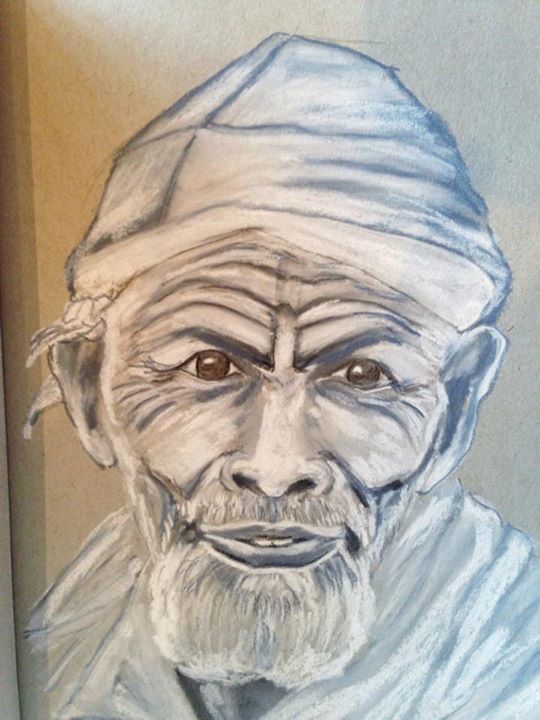
Day 4

Day 4

Descriptions of the drawings:

Day 1: Cow …

Day 2: … and more cow!

Day 3: Bull

Day 4: My hubby took this mans photo in Ethiopia several years ago, and I have wanted to draw him ever since. I loved his quiet dignity and kind gaze, along with lines on his face that tell a story he was too young to be in a position of telling.

Day 5: Another photo my sweetie took of a compelling face, this one from Italy. In America, we seem to have a problem with age, but I think we are wrong. It is these lines that compel, that tell a story of where we have been, what we have learned. These are the faces I most enjoy drawing. Faces with history.
If You Go: Florence, Part 1

Standard

ifyougo3

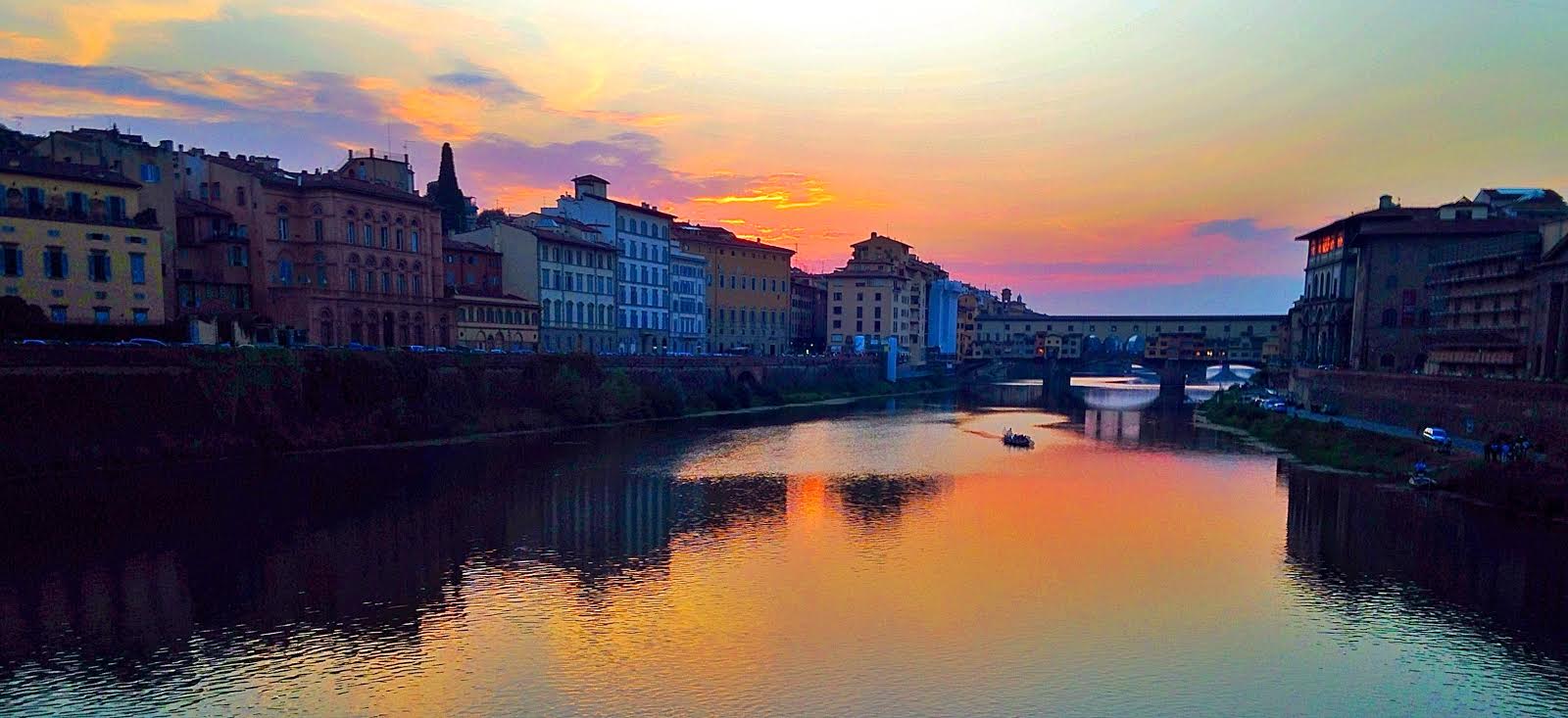
There are a few things that if you go to Florence and do not do, you must lie to me and tell me you did do them. I’m not an expert on the city, I’m just an aficionado, and that can be almost as good. So if you want a few insider ideas from a gal who loves the city, I’m your girl, and read on. Even if you’re not planning a trip, virtual travel can be rewarding, so I say, still read on!

My recent trip to Florence was my fourth visit to the magical Renaissance city, and I’ve come to appreciate its second and third layers beyond the Duomo (and yet, the Duomo is not to be missed). But I want you to think of the city as a multi-layered art-, food- and wine-lover’s paradise, and you do need to peel back the layers.

Italy simply put cannot be lumped together as one. Yes, it’s a single country, and good food, wine and an appreciation of art and beauty can be expected anywhere; however, the country was not united until 1871. Each area has its distinct characteristics and time in history.

Florence’s heyday was the Renaissance. While its rise to power started long before, in the Middle Ages, with Gothic art and Dante’s Divine Comedy, it was the Renaissance when everything came together and Florence became a force in and of itself.

In visiting this city, it is important to keep in mind that Florence, like nowhere else on earth, is the Renaissance. It’s worth doing your homework on this art movement before you go. I recommend Rick Steves’ guide book and TV show as a wonderful art history reference. Steves is an avid lover of art history, and he covers the important details with shocking accuracy — with entertainment thrown in for good measure. For art and history lovers, his book “Europe 101: History & Art for the Traveler” is as good as my college art history textbook and far more interesting. (Or, humbly stated, check out my Florence blogs, where I try to cover the highlights of the Renaissance without too much boring detail.)

So now that you have a reasonable understanding of the Renaissance and you know the difference between Gothic-pointed arches and spires as compared to Renaissance-rounded arches and domes, clean, simple lines and Humanism, you’re ready to visit Florence.

There were no sites I went to that I considered a bore or that could be easily overlooked; they are all fantastic. If your guidebook recommends it, it will be worth your while. But I highly, highly, recommend a guide. Rick Steves lists several in his guidebooks, and TripAdvisor has referrals. There is so much information packed into each site they can almost come alive for you if you have the “key.” A good guide is that key — unlock it! It’s money you will never regret spending. I also strongly recommend going off-season and for several days. Anything shorter than four nights, leaving three full days, is cheating yourself.

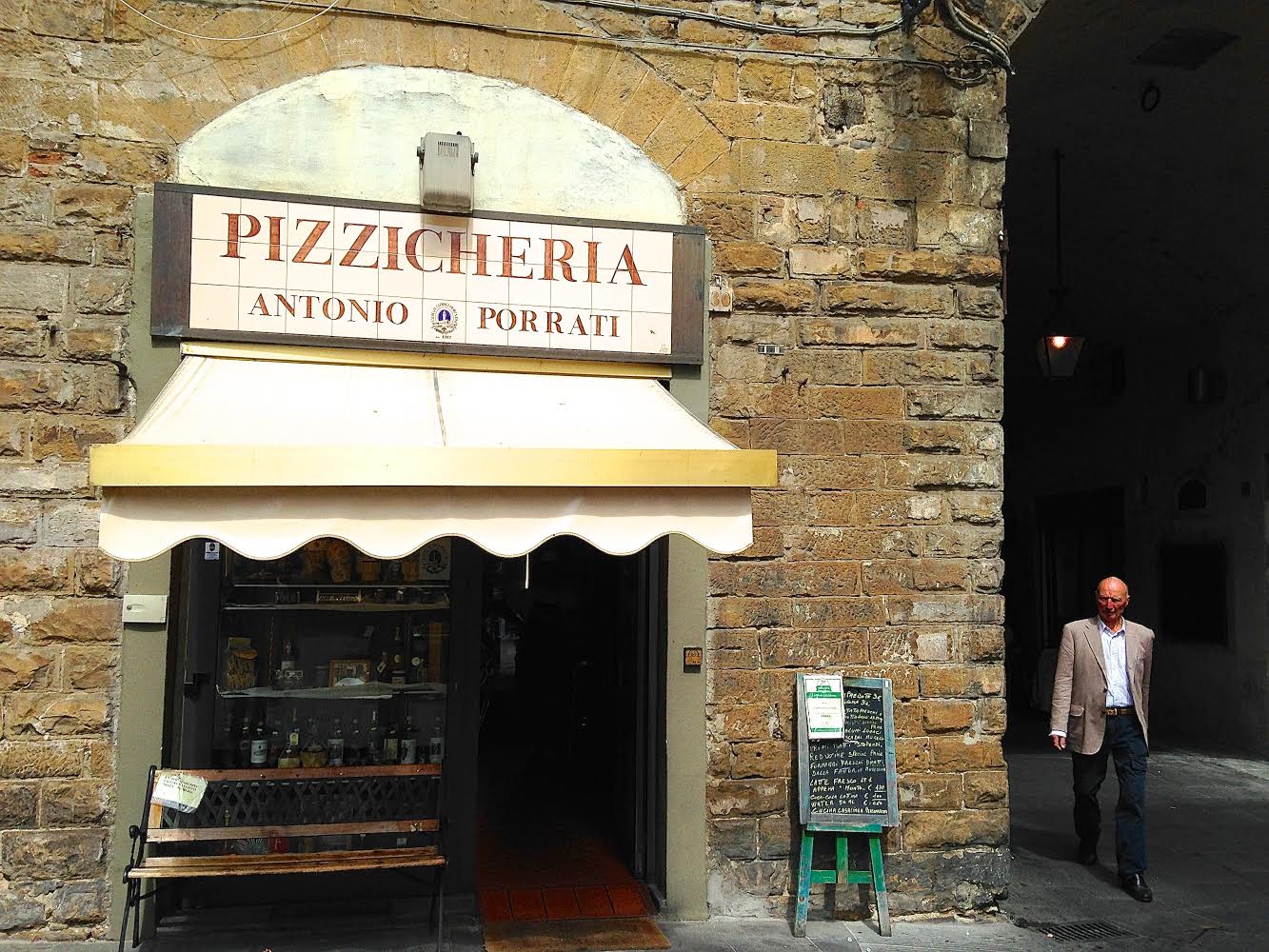
So now for my absolutely favorite Florentine experiences. Please, please, please make the effort to find Pizzicheria Antonio Porrati restaurant on the Piazza di S.Pier Maggiore. You can find it on Trip Advisor and the address is 30/R., Bergo Degli Albizi. This is a lunch or late-day snack spot. Check online for hours and grab a table outside and let the folks behind the counter feed you.  Pizzicheri is quite the experience, with the most smiling jolly owner you could ever want to meet.  Don’t forget to ask for the house wine; it’s good — and a dollar a glass. Buon Appetito and Salute!

pizzicheri

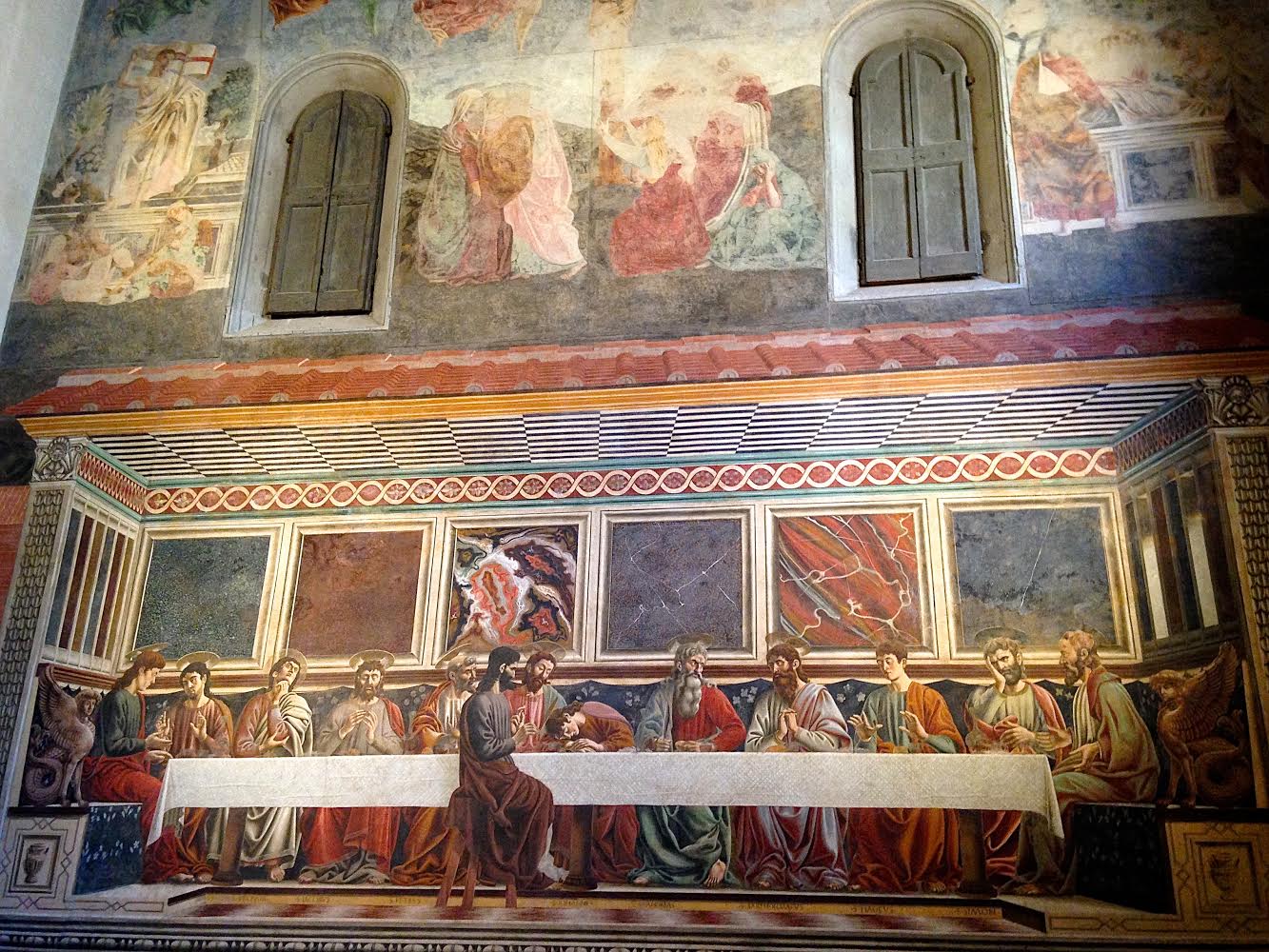
In art, you have to tell me you went to see The Cenacolo of Sant Apollonia and The Last Supper fresco by Andrea del Castagno. It’s a minor sight — it most likely is not in your guide book — but it’s so worth it. You will find it on Trip Advisor #52 of 224 sights.

convent

So why am I sending you here? It’s a quiet convent in Florence where you can walk right in and be almost alone with a uniquely Florentine Renaissance masterpiece. The fresco is in nearly perfect condition and is the reason you’re here. It’s peaceful, there are no crowds and you can grab a seat and let this work of art fill you. Castagno is a early author of the Renaissance, and his work can only be found in Florence, due to his death at the young age of 26. I could cite for you many reasons this work is important, from its Florentine Renaissance characteristics, like strong use of drawing and each disciple depicting a different emotion (hello, humanism), to the marble backdrop with its nod to Ancient Rome. But this is not why I send you here, I send you here to let the preciousness and beauty wash over you. Behold the Renaissance.

To be continued…