Tag Archives: creativity

Art in Action: How to rock it out with the wee ones!

Standard

Image

“Aunt Stephie, um, can we paint?” This said in the softest, sweet voice that belongs to my 5-year-old niece.

This request is almost certain to pop up after family dinner at my house. My well-mannered sister-in-law has no doubt instructed her that the polite thing is to wait until we are all fed. Claire is asking on behalf of herself and her older brother, Colton, and it’s a request that is met with a resounding YES!
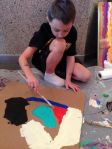
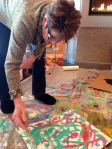
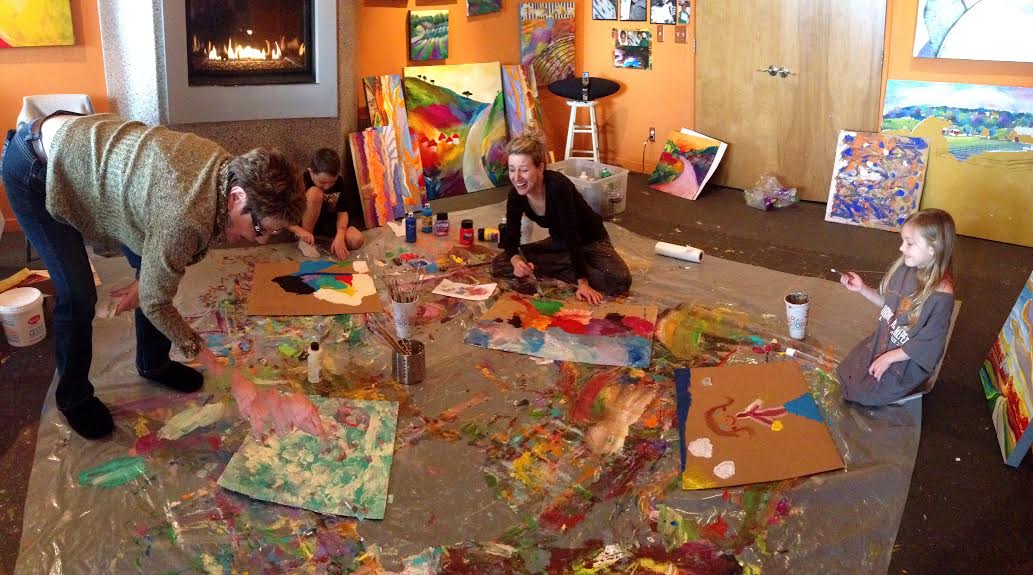
I save old cardboard and T-shirts just for this occasion. I roll out a sheet of plastic and set out water buckets and bring out the tub of paint and we play right on the floor. It’s the greatest thing ever I don’t have to offer suggestions; they are kids, not yet old enough to have lost their imagination. They always attack their pieces of cardboard with the authority of one who knows what they are doing. I love this bit. It reminds me we are all born artists. To paraphrase Picasso, the key is to remember how to stay one as we grow older.

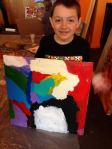
Looking at their masterpieces — both bought from the artists for $5 each (I can’t bear to see them go, and Colton and Claire like the cash) — I said to my husband, “I love the abandon in their work. I wish I could paint like that, totally free and without regard for outcome.” He smiled, admiring their work. Kids have long inspired me in this way.
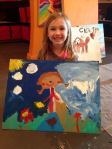
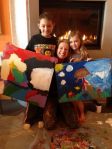
I’ll leave you with this thought: Paint with your children — or other kids you love — often. It takes nothing more than the basics: a surface to paint on, paint, a plastic throw and brushes. And join in the fun! Don’t have them paint alone — fun is not reserved for the wee ones. An imagination is indeed a terrible thing to waste!

A welcome interruption: Claire and Colton take a break from painting to watch the wildlife outside the studio!
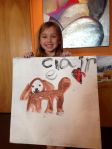
 

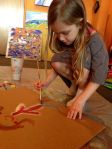
Claire’s finished rendition of Muchacho Libre. I see the resemblance, don’t you?
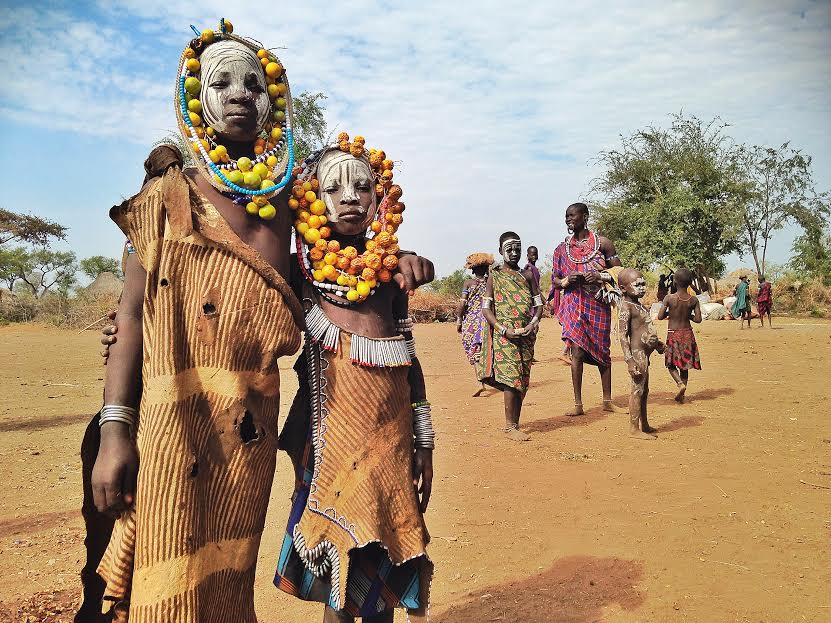
The Mursi people of South Omo, Ethiopia, and where an idea comes from

Standard

Image

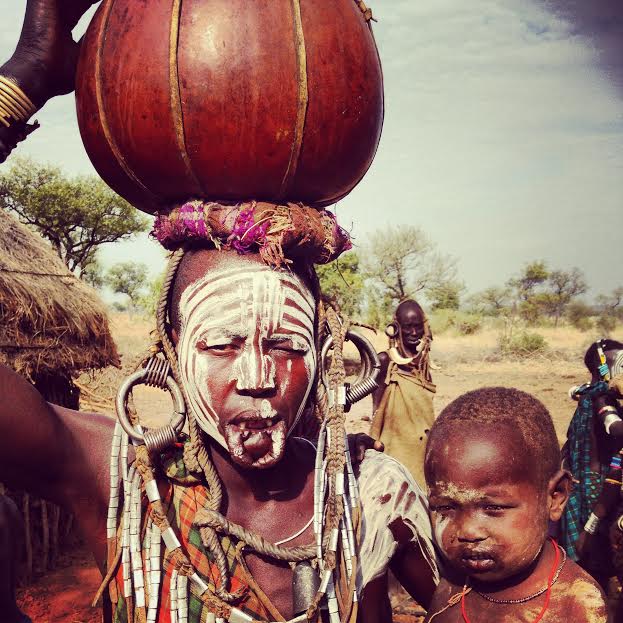
Shocked, astounded, visually stimulated and speechless best describes my feelings the first time I visited the Mursi tribe of South Omo.

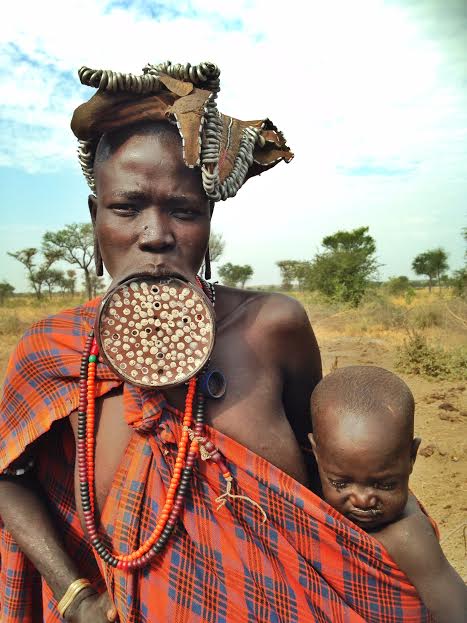
ImageThe women, as a course of custom, have their lips cut so a disk can be inserted around age 15, just before marriage. I read somewhere that this originated as a way to avoid slave trade, but it has evolved into a status symbol and a sign of beauty: the bigger the disk, the more wealth and importance a woman has — directly related to her husband, of course. This is the most radical of their physical decoration, but by no means the only. The sheer amount of adornments with which they ornament themselves is a work of art in and of itself.

The Mursi are nomadic, and the roughly 7,500 who remain live mainly in the Mago National Park. As they are — like many of the world’s native people — displaced, the government lets the Mursi stay in the park as an apology for taking over their land.

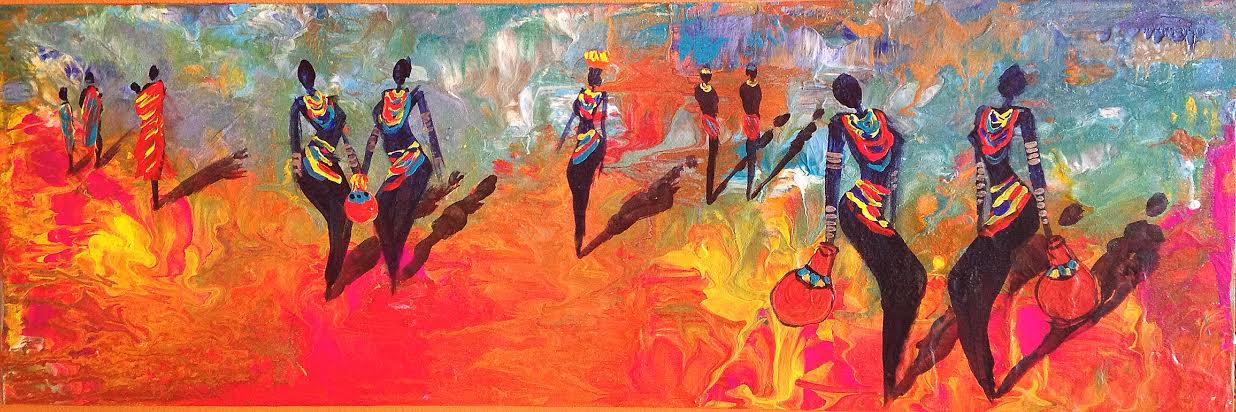
mursi9I first visited a Mursi village eight years ago. To say I was profoundly impacted is an understatement. I was then, and I am now. I returned to visit these nomadic tribespeople this past January. There was no way for me to not paint this experience. It shouldn’t be interpreted as a glorification, nor an implication that I am making any statement at all about these people and their way of life in my work. I am simply responding to what I experienced.

Driving through Mago National Park to arrive at the Mursi village, you pass through vast, arid, desert-like landscape. The environment itself feels harsh. Then, out of nowhere, people appear with the swift movement of the natural-born hunter/gatherers that they are, incredibly fit and fast as they run along the road — in search of what, I do not know. In the village, there is a flurry of activity: people walking with their perfect posture and long sticks, people of all ages and sizes. Other than the small huts they live in and the occasional thorn bush or acacia tree, the landscape behind them is flat and seems to go on forever.

The Mursi are nomadic pastoralists who have, until now, lived virtually unchanged for hundreds and hundreds of years. But now, change is coming to the Mursi, and they were vividly featured in Gianni Giansanti’s book “Vanishing Africa.” I am grateful to have experienced tribal Africa before it has, in fact, vanished.

I did not want to paint the details; I often don’t. To paint the lip plates and all the decorations seems pointless to me, as I have so many amazing photos. I wanted to paint the essence of what I was experiencing, and that is how these paintings came to be. It’s all born in a feeling, an experience translated through the creative filter that is me.

Image