Tag Archives: stephanie schlatter

Florence, Day 13: Can Someone Please Stop the Spinning in My Head? And Other Tales of Florence

Standard
florenceday13-2

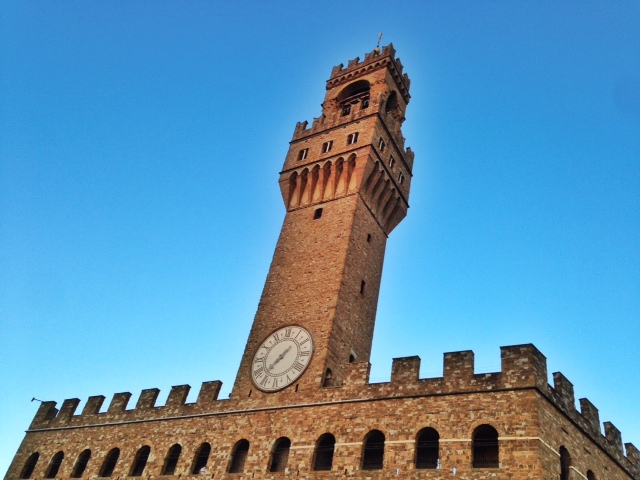
Palazzo Vecchio

No, it’s not the wine. It’s not jet lag; I’ve been here two weeks now, I’m adjusted. It’s not even the sea of people rushing by me at any given moment. OK, maybe it’s a little bit due to all of the hordes of people here for the same reason I am — all that art. More so, it’s the information, the stories of and about the art, the artists and the patrons.

It’s a good kind of spinning. I wouldn’t have it any other way.

As I learn more of the history of Florence and view it for myself, I gain a greater understanding of the city and its art movements. It seems to sweep you up and carry you along on its journey.

Think of the Renaissance as a giant bulldozer making way for everything that came after it. Plowing away the Dark Ages and letting in the light. It’s a kind of foundation upon which all later art was built.

I also think of the Renaissance as an explosion, like the Fourth of July happening everyday for 200 years. All here in Florence, with the backdrop of the River Arno.

Again, we have to be careful not to get to over the top over the whole thing, not putting these people on pedestals, for fear of shriveling in the shadows while imagining a grandeur so far removed. Still, to view and learn the history is, I like to think, a duty of artists. To know the who and why of this path that was bulldozed for me to walk through.

Today, I did that at the Museo Stefano Bardini. Stefano (1836-1922) was an artist turned art and antiquity dealer, one who greatly influenced the trade and auctions in the United States. It’s a lovely and quiet museum, with lovely things. His passion was wide, and his trading encompassed everything from Roman ruins to weapons and paintings.

I was most impressed by a Donatello (early Renaissance): It’s a Madonna and child that surely must be the first collage painting. It’s made of wood, plaster, glass and even leather mosaics. It delighted me think of this master wanting to “play” and explore the possibilities in this way. Also captivating: a room of drawings by Tiepolo. Delightful works created from a masterful but free hand.

This slideshow requires JavaScript.

After a short break to recharge, Benedetta and I were off to the Palazzo Vecchio, the city hall turned Palace of the Grand Duke of Tuscany, Cosimo de Medici. When the Duke and his wife Lenora moved their residence from the Medici Ricardi Palace to here, they hired Vasari to “redecorate,” raising the roof of the Hall of 500 by 20 feet and plastering the room with paintings from the ceiling down. It’s a grand celebration of Florence, the victor of Tuscany. Here again, we have art as a reflection of the times. Florence has defeated all of Tuscany, and I, Cosimo de Medici, am grand duke of it all: Let’s show the world. Keep in mind, this is all before Facebook, so you had to get the word out somehow (wink). No cameras, so art played this role as well as to tell a story.

The palace goes on with Lenora’s chapel by Bronzino being a highlight. So much symbolism, stories and history all told in the beautiful craft of art.

This slideshow requires JavaScript.

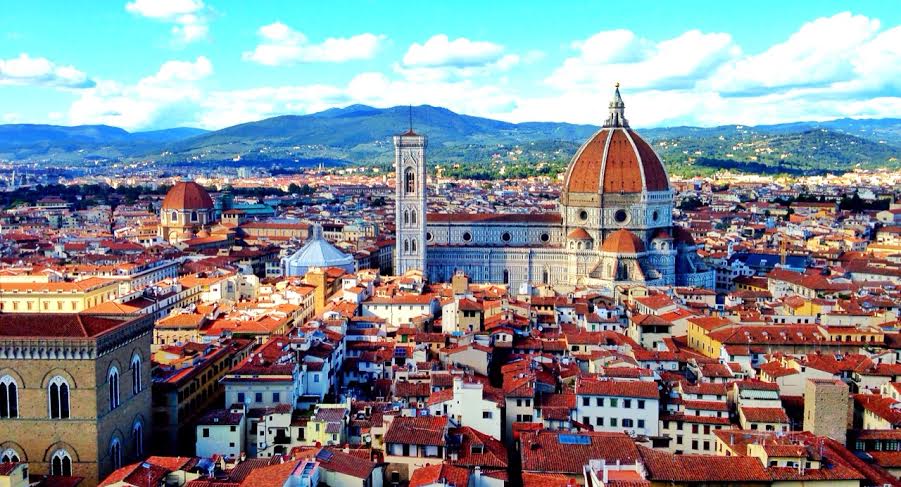
I need some fresh air. Luckily, you can climb the tower of the Palazzo and before you know it, your head is lighter. The air swirls about you and there is no more information to take in, only the material beauty of the landscape. Sigh. A beautiful way to wrap up a week of art history. And a deep bow of gratitude to Benedetta Natali for making the city come alive for me.
florenceday13-3

The view from the Palazzo Vecchio tower.

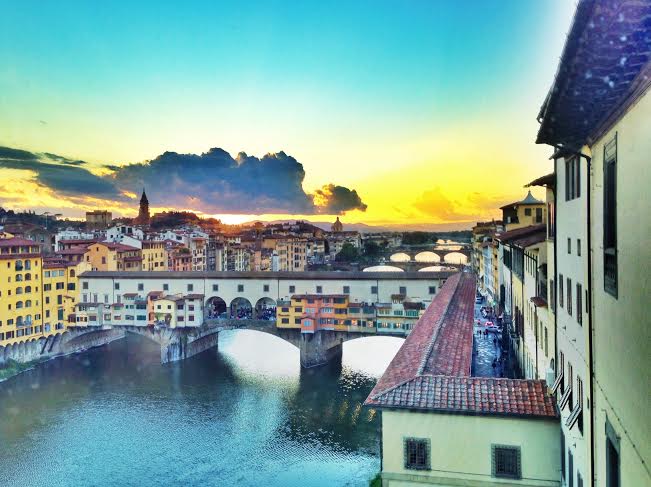
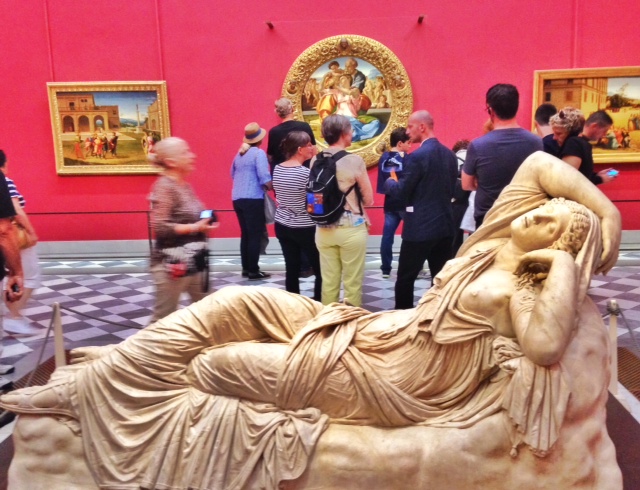
Insider secret: The Uffizi and Accademia museums are open until 8 p.m. on Tuesdays and Fridays, and they are very quiet at this time. Last night, I celebrated my week of art history with a nighttime visit to the Uffizi. Here are the sunsets as I strolled the halls, almost by myself. Bring able to meditate on the art without the masses is so relaxing. It’s an experience not to miss.
florenceday13-1

Florence, Day 11: Dodging Pedestals in the Face of Greatness

Standard
florenceday11-4

Looking how I was feeling after my class in the Uffuzi Gallery Michelangelo room.

How does a modern day Florentine find his or her own identity in the shadows of so many geniuses? I asked my teacher Benedetta. “Yes, it is hard,” she replied. “I have heard of artists who come here to Florence and never work again, completely crippled by the grandeur of all those masters.”

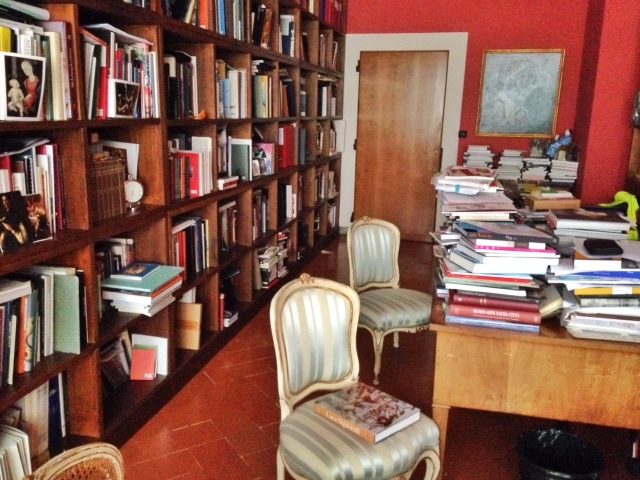
Today, my teacher, very sweet and humble, said, “Today you will discover my secret. My father is the director of the Uffizi.” She introduced me (swoon) to a handsome man in his early 60s without a trace of pretense. He proudly showed me photos of his three beautiful daughters and wife and I’m thinking, “Um, yes, nice, but can we talk about those stacks of books on your desk? Tell me about your work? What does the director of the Uffuzi do? Can I see the ‘Birth of Venus’ without the glass? Touch it? Let’s get a photo.” But no, I had respect. I simply shook his hand and said, “So nice to meet you,” then did my best not to flood sweet Benedetta with questions about his work.

florenceday11-6

I had to sneak this photo of the director’s office. Look at all of these books! My nightstand at home looks like a mini version of his desk. (Swoon)

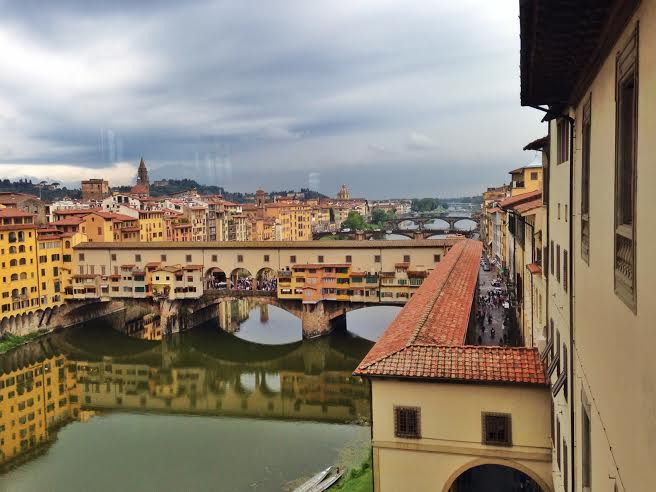
The Vasari corridor as seen from the Uffizi.

The Vasari corridor as seen from the Uffizi.

Soon, that was not hard, as she is a brilliant and interesting art historian in her own right; her father must be proud. She walked me through Florence in the form of paintings from the 14th to the 17th centuries. I watched the works unfold before the Renaissance, with the strong gold leaf backgrounds and flat figures, to the time when slowly the details emerged. The bodies became 3D, the faces gained expression, the backgrounds became landscapes and the Renaissance exploded in all its full-blown glory.

We walked right through Leonardo, Michelangelo and Raphael’s High Renaissance until we ended with Caravaggio and the Baroque period, with its exaggerated expression and extreme lights and darks.


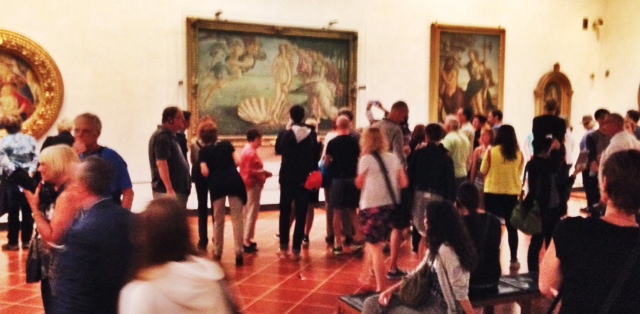
Turns out I'm not the only one completely enchanted by Botticelli.

Turns out I’m not the only one completely enchanted by Botticelli.

florenceday11-1

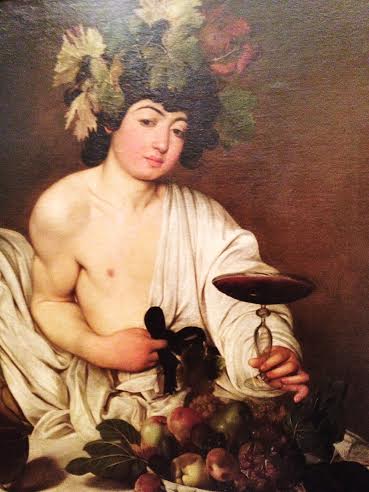
Caravaggio’s “Bacchus”: Gotta love a country that honors the God of Wine. I’ve always loved this painting.

I learned about many of the things that influenced these movements. For example, Michelangelo was in Rome when they uncovered many statues from the Hellenistic period. He was deeply influenced by the extreme gesture and emotion of these works. His own work becoming more filled with expression at this time.

Benedetta and I took a small break on the lovely rooftop cafe with a view of the Duomo as we were finishing up. The legs tire and the mind can hardly comprehend. It’s all almost too much, too much beauty all in one place, too much excitement. One needs to pause to take it in, but then you’re staring at the Duomo, and again you must catch your breath.

This is what I mean when I say you must somehow find your place and keep these geniuses of art off their well-deserved pedestals. You can get psyched out. It might be easy to feel very small, but you must find your own place in the folds of history — maybe not as a famous person but as one of value, as we all are.

I think it must be a certain kind of pressure for Florentine artists, and indeed Benedetta pointed out that in Mannerism, which followed the Renaissance, there was this anxiety for artists to try to paint after this huge and brilliant time where art absolutely blossomed and flourished under the skill of so many huge talents.

I guess you just do as the famous Contemporary artist Chuck Close says: “Show up and get to work.” Yes, I think I will just continue to show up and see what else this city will reveal to me!

florenceday11-2

And let us not forget the culinary arts!