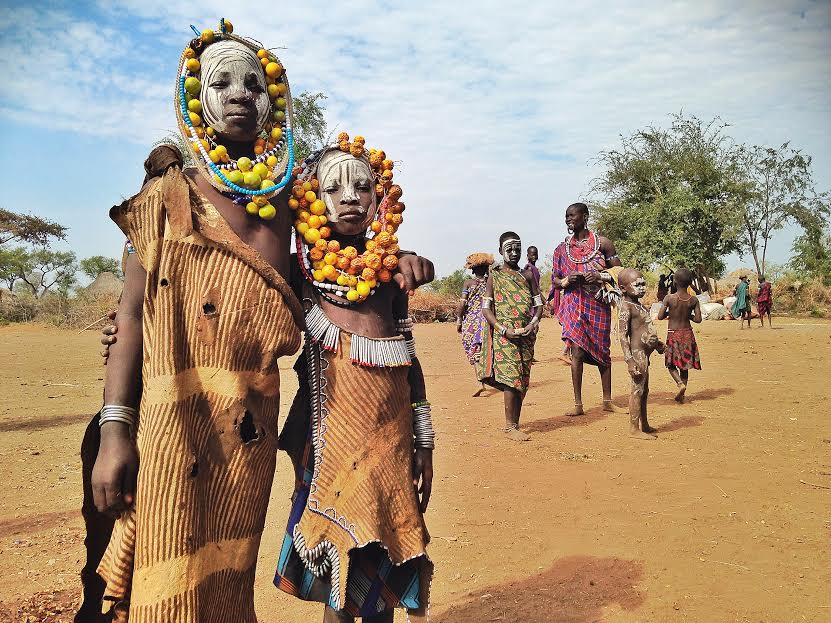
Shocked, astounded, visually stimulated and speechless best describes my feelings the first time I visited the Mursi tribe of South Omo.
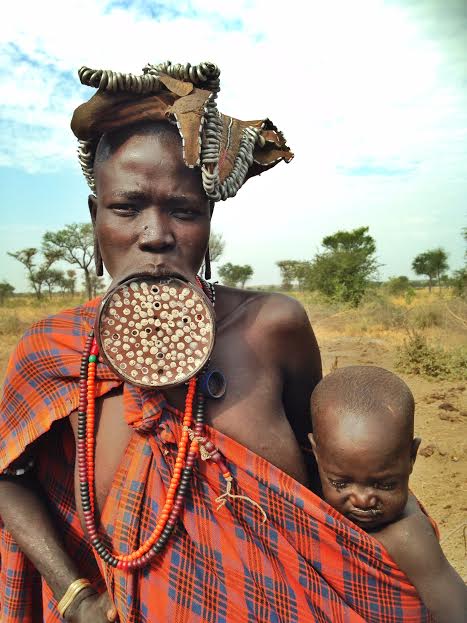 The women, as a course of custom, have their lips cut so a disk can be inserted around age 15, just before marriage. I read somewhere that this originated as a way to avoid slave trade, but it has evolved into a status symbol and a sign of beauty: the bigger the disk, the more wealth and importance a woman has — directly related to her husband, of course. This is the most radical of their physical decoration, but by no means the only. The sheer amount of adornments with which they ornament themselves is a work of art in and of itself.
The Mursi are nomadic, and the roughly 7,500 who remain live mainly in the Mago National Park. As they are — like many of the world’s native people — displaced, the government lets the Mursi stay in the park as an apology for taking over their land.
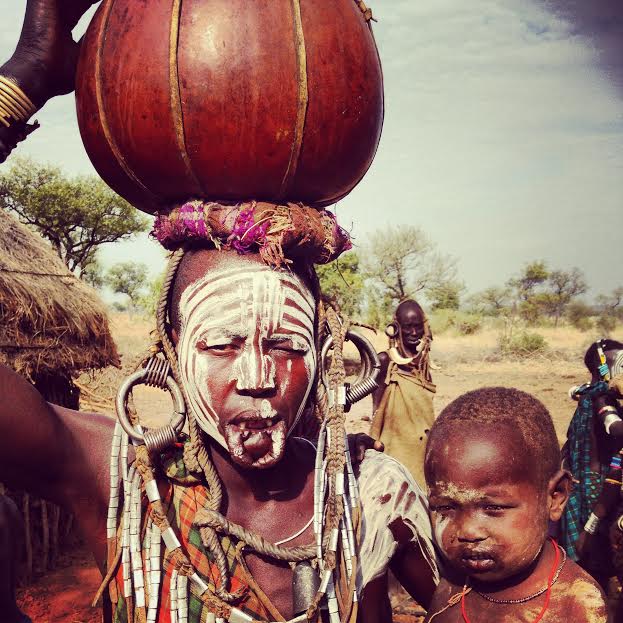 I first visited a Mursi village eight years ago. To say I was profoundly impacted is an understatement. I was then, and I am now. I returned to visit these nomadic tribespeople this past January. There was no way for me to not paint this experience. It shouldn’t be interpreted as a glorification, nor an implication that I am making any statement at all about these people and their way of life in my work. I am simply responding to what I experienced.
Driving through Mago National Park to arrive at the Mursi village, you pass through vast, arid, desert-like landscape. The environment itself feels harsh. Then, out of nowhere, people appear with the swift movement of the natural-born hunter/gatherers that they are, incredibly fit and fast as they run along the road — in search of what, I do not know. In the village, there is a flurry of activity: people walking with their perfect posture and long sticks, people of all ages and sizes. Other than the small huts they live in and the occasional thorn bush or acacia tree, the landscape behind them is flat and seems to go on forever.
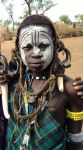
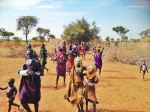
The Mursi are nomadic pastoralists who have, until now, lived virtually unchanged for hundreds and hundreds of years. But now, change is coming to the Mursi, and they were vividly featured in Gianni Giansanti’s book “Vanishing Africa.” I am grateful to have experienced tribal Africa before it has, in fact, vanished.

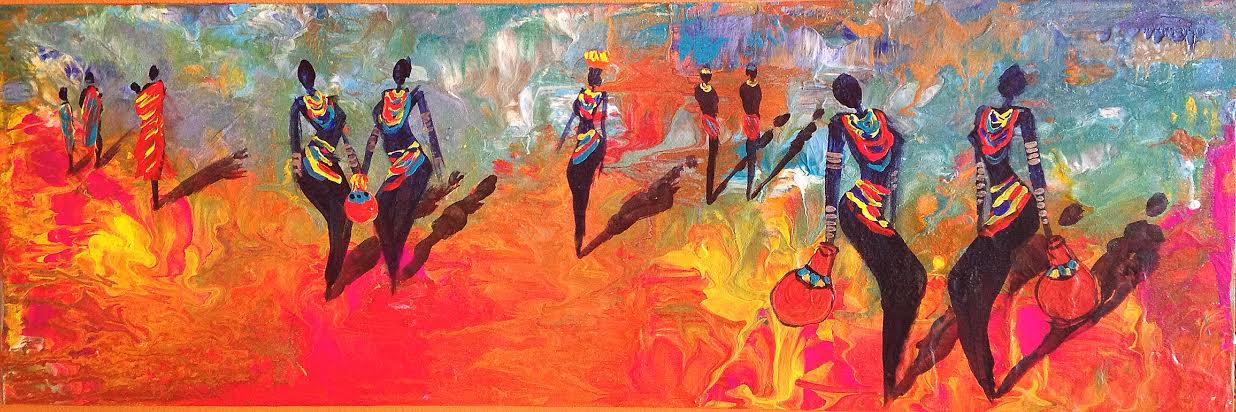
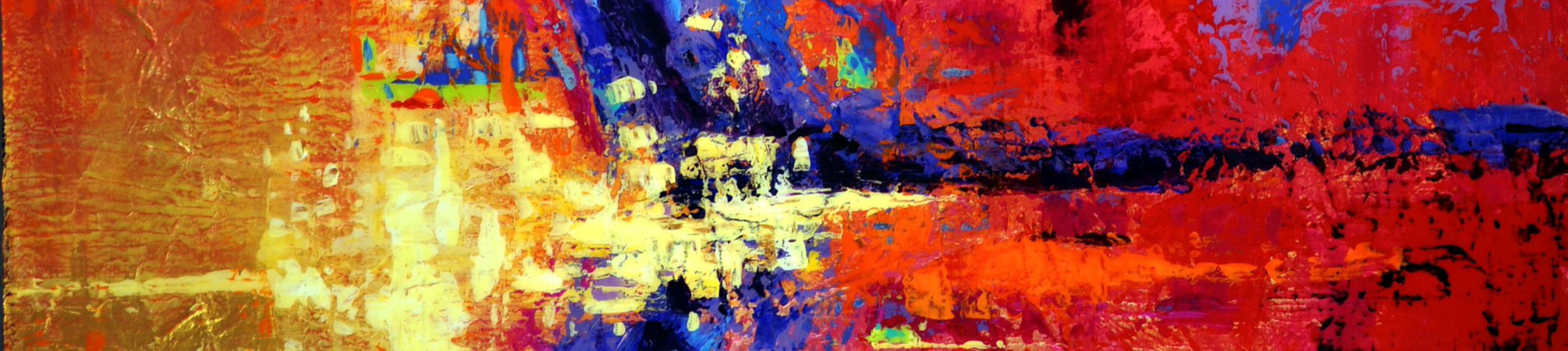
I did not want to paint the details; I often don’t. To paint the lip plates and all the decorations seems pointless to me, as I have so many amazing photos. I wanted to paint the essence of what I was experiencing, and that is how these paintings came to be. It’s all born in a feeling, an experience translated through the creative filter that is me.
 Stephanie Schlatter Art