Tag Archives: art

Realism vs. Abstraction: Not So Black-and-White

Standard
bwday1

Day 1

My dad called me the other day.

“Mom showed me your recent drawing on Facebook — my daughter’s got talent!” he exclaimed.

The drawings in question were a response to a “B & W Challenge,” where I was supposed to post a black-and-white photo every day for five days. I desired to really challenge myself, so I opted to do five black-and-white drawings instead of photos. I did these works in a more realistic fashion than my paintings.

When my sweet Papa — who has always encouraged me and always praised my work and meant no harm at all — said this of the drawings, I was a little bummed.

Why? Here’s the secret: I want everyone to know what I did in these drawings was, for me, easier than the work I do with my paintbrush every day. I felt disappointed in my dad’s words because I know most people who have not studied art think, “The more realistic, the more talent.”

Yes, making art that is realistic does take talent, but not imagination, and imagination is hard. Copying from reality is easier than doing a work of art that includes your feelings and personal interpretation and is more abstracted. Say what? Yup, it’s true, and here is why: When I do a realistic work, I am copying what already exists. I look at the photo in front of me and render it. The information is all there. I don’t have to use my imagination at all, just the skills they taught me in art school. Please understand that I’m not saying it doesn’t take skill to work realistically, I’m saying it doesn’t take creativity and imagination. I’m saying it’s a skill that can be taught. Imagination can only be exercised, but not taught.

In college, there were the inevitable people who wanted to skip all the rules and move right into abstraction. I understood this. I, too, admired most painters who abstracted in some way, who were “painterly” in their approach, with a kind of freedom that hyper-realism doesn’t allow for.

But I found quickly the abstract works by students who had not yet learned the rules lacked something; frankly, they lacked a lot. That knowledge goes deeply against that old saying “My kid could do that.” Abstract work done without skill doesn’t show up in your local museum; you can tell the difference. I remember thinking in art school that if I wanted to move into work that was more abstract and expressed more how I felt about something than what a camera might record, I had better learn the rules first. Learn the rules — then break the rules, from a place of knowing.

It is the breaking of the rules that we modern artists spend the rest of our artistic journeys working on. It’s the exploration of ourselves in the backdrop of the idea or scene. The reinterpretation of what exists. What exists is already there; it’s your artistic interpretation that you must invent, and invention is hard.

Thank you for coming along for the ride on this wild journey of artistic exploration; learning the path wouldn’t be the same without you, the viewer. And next time you hear someone say, “My kid could do that,” please do hand them a canvas, paint and brush and invite them to try, while reminding them: “But your child did not do this, and this artist did, after much study and work.”*

Cheers to the artistic process, the breaking of the rules, and the magic you find in between the two.

*Before I sign off, I have to add that when I shared my disappointment and explanation with my dad, a former art student, he said, “I know all that, honey. I love your work — I just liked the surprise of these drawings!” Fair enough, Papa, fair enough!
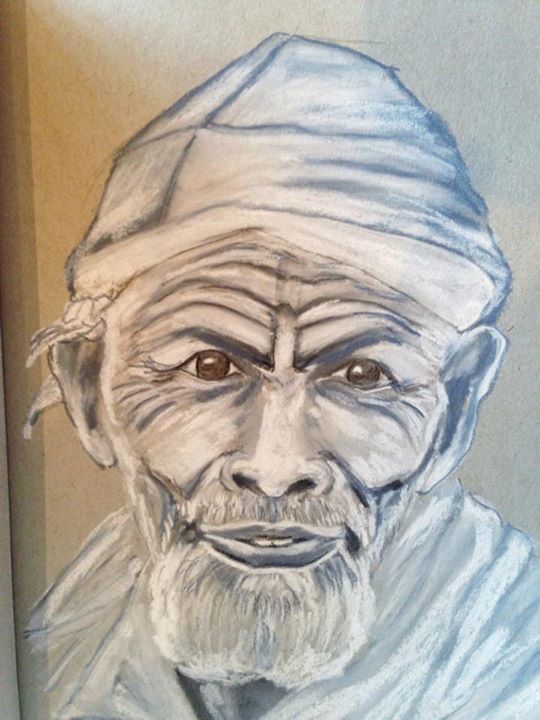
Day 4

Day 4

Descriptions of the drawings:

Day 1: Cow …

Day 2: … and more cow!

Day 3: Bull

Day 4: My hubby took this mans photo in Ethiopia several years ago, and I have wanted to draw him ever since. I loved his quiet dignity and kind gaze, along with lines on his face that tell a story he was too young to be in a position of telling.

Day 5: Another photo my sweetie took of a compelling face, this one from Italy. In America, we seem to have a problem with age, but I think we are wrong. It is these lines that compel, that tell a story of where we have been, what we have learned. These are the faces I most enjoy drawing. Faces with history.

If You Go: Florence, Part 2

Standard
ifyougo2-6

View from Piazza Michelangelo

The magic of Florence is in its art. It is in every way an art (and history) lover’s city — paradise even. Florence is, as the saying goes, for lovers: ART lovers.

What happened in that small town from 1300-1600 in the arts was, and is, astonishing. This is why you go to Florence. Yes, you will find really great food and wine and a beautiful city, but these three things can be found in less touristed Tuscan towns. But the art — ah, the art — is why you put up with the hordes of other tourists. Yes, this is why you go to Florence.*

In my last blog, I covered a few out-of-the-way spots for art and food. There are a few more to add to the list.

In Florence, it is important to remember, unless you’ve bought or rented real estate (and if you do, I’ll come visit; you’ve got a friend in me), you will not see it all. It’s simply mind-blowing how much art is here. Consider, if you will, that much art was lost, forgotten and burned in the bonfires of the vanities, destroyed by the great flood of 1966, and still, an astounding amount remains, enough to fill a lifetime. So, my friends, do not try to see it all, and know everything you do see will be worth it.

My favorite out-of-the-way neighborhood is the Oltrarno; in Italian, this means “other Arno” or “the other side of the Arno.” It’s a pleasure just to wander it with no agenda. This is where all the workshops are, and you can see artisans diligently creating.

Oltrarno neighborhood

Oltrarno neighborhood

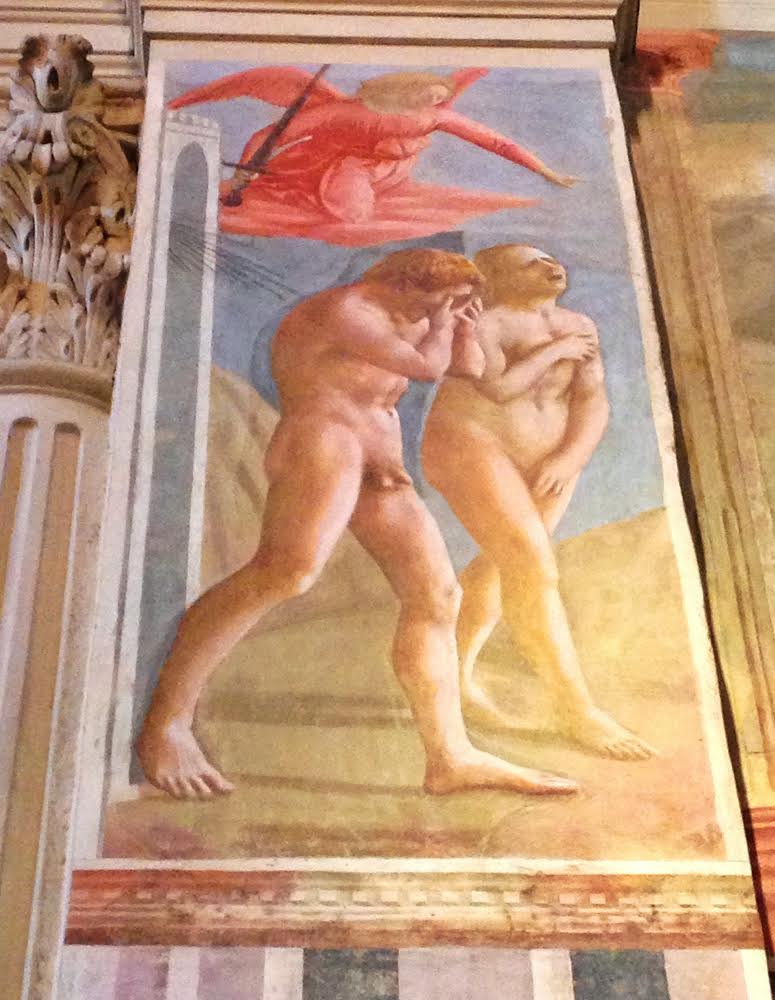
You should make a point to visit Santo Spirito church and the Brancacci Chapel. Santo Spirito is a thriving little square, as well as the church where you will find works by Brunelleschi (the church’s designer), Filippino Lippi, Rosselli and other Florentine masters, including a early crucifix by Michelangelo. In general, the church is just a delight to visit. In this neighborhood, you will also find the magical little Brancacci chapel. Some say these Frescos are some of the first — if not the first — Renaissance paintings in Florence. They do beautifully show you what the early Renaissance was all about: humanism, perspective, individuality and real emotion. Masaccio, considered by most the first Renaissance painter, came here to help his master Masolino with the commission. Masaccio out-painted his master and was far better at humanism; the contrast tells a story. Get a guide if possible.

ifyougo2-1

Masaccio’s explosion of Adam and Eve from Paradise, found in the Brancacci chapel.

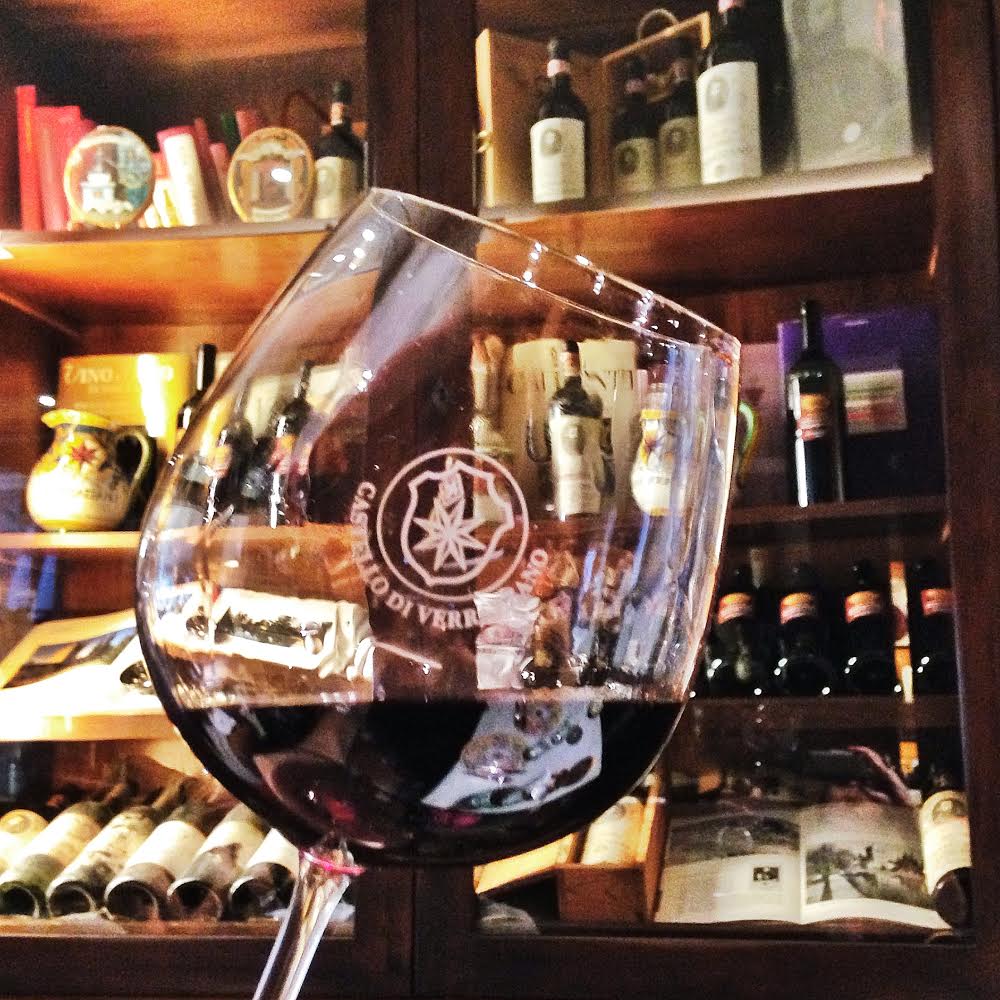
After you have gotten wonderfully lost in the Oltrarno, cross the river to Cantinetta dei Verrazzano on Via dei Tavolini, 18-20r 50122. This place is discovered (as all good restaurants in Florence are discovered), so you won’t be alone, but it’s my favorite way to nurture my tired tourist body and spend a delightful afternoon. There is a deli service, but enjoy the experience of sitting in the restaurant. I first came here on a solo trip in 2005; it was January, and I did virtually have the place to myself. Last fall, I brought my mother; she was enchanted and delighted. And I visited several times on my recent trip, bringing my husband along. We were so enjoying our long lunch here that we missed a epic hail storm on an 80-degree September day that left the city looking like winter. That’s right: We had no idea it had happened until we emerged to find piles and piles of ice. You can lose yourself here, and I suggest you do just that.

Cantinetta dei Verrazzano

Cantinetta dei Verrazzano

As for my must-do sights that you already know about: Yes, go see David; I promise he will take your breath away. No, seeing the — as the Florentines say — “bad copy” in the Piazza Della Signoria is not seeing David. I repeat, this is not the same thing. While you’re there, gazing upon the wonder that is David, don’t forget to notice the fellow admirers who are also gazing; you can sit here for a long time, entertained by the flood of people.

ifyougo2-3

David and the dome built to show him off.

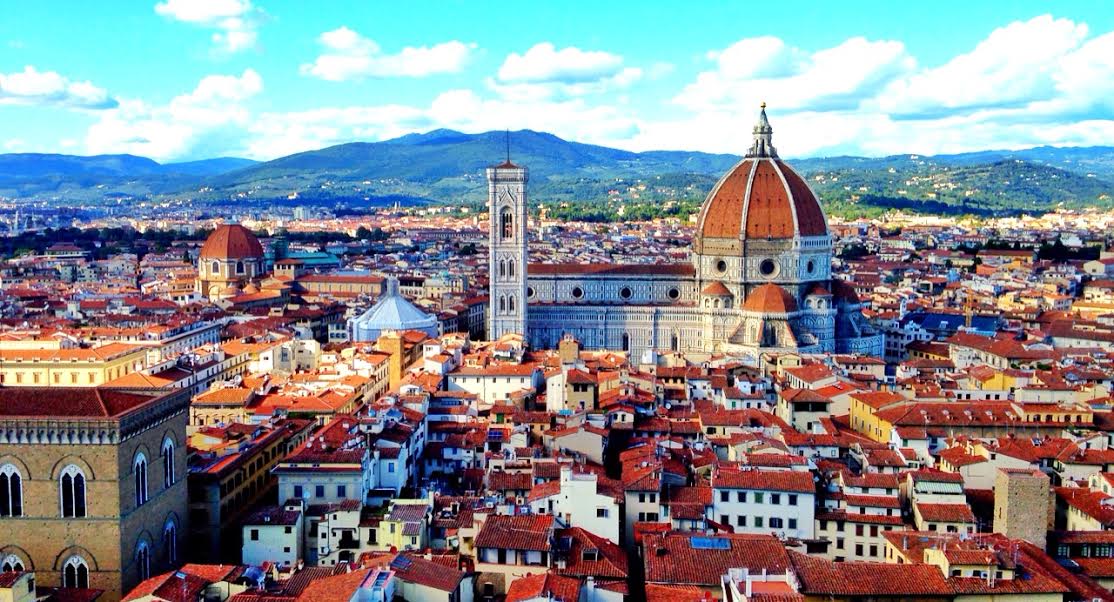
Climb the Duomo. Some say to climb the Campanelli to be able to view the Duomo, and that is lovely too, but if you climb the Duomo itself, you can see the “dome within a dome” construction. Keep in mind, this church stood finished, minus its dome, for 100 years because no one could figure out how to build such a big dome. Brunelleschi came up with this smaller dome within a dome, with a hollow area that you can now walk through. This hollow area created much less weight, making the dome possible. If you’re claustrophobic at all, maybe skip this. Seeing the brickwork and construction, for me, is a great Florentine experience. Climbing the tower of the Palazzo Vecchio is also a thrill. I’m a fan of anytime you can get a up-in-the-air view.

View of the beautiful Duomo from the tower of the Palazzo Vecchio

View of the beautiful Duomo from the tower of the Palazzo Vecchio

Speaking of up-in-the-air views, the church of San Miniato, just next to the Piazza Michelangelo, is another must-see. Even without its stunning view, the church itself is a pure delight. I visited this precious little church twice. The first time, on a run, I just popped in and my breath was taken away. It’s just priceless. I went back with my art history teacher and heard the stories behind the works of art within — and the work of art that is the church itself — and this jewel gained even more meaning. You could come here just for the commanding view of the city alone, but also come to see this church.

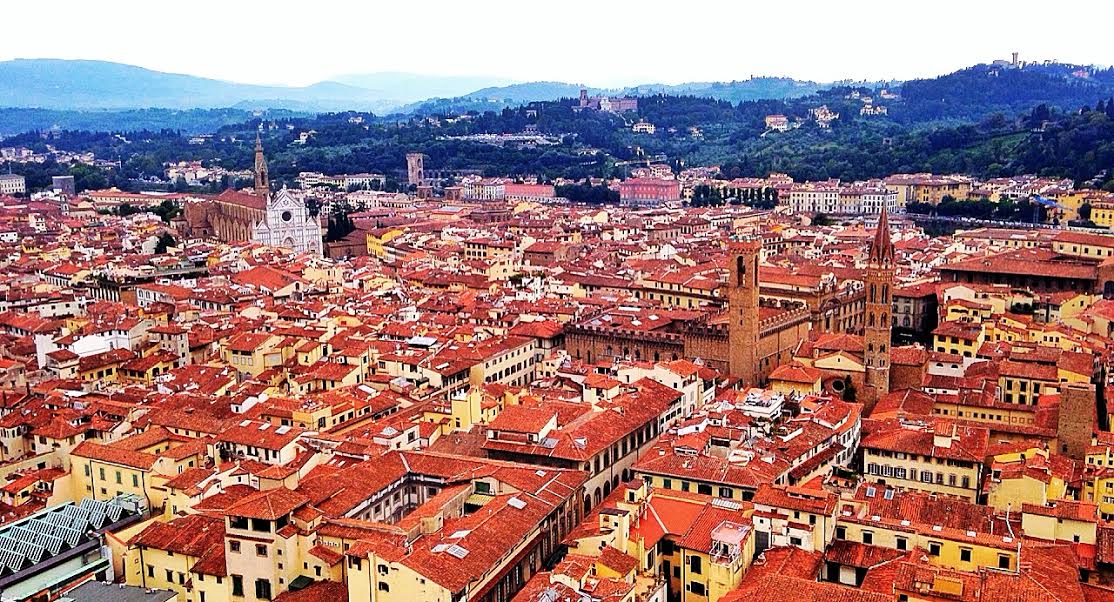
View from the Duomo

View from the Duomo

Last but not least, the Piazza Michelangelo, just beside the church of San Miniato You walk up to this piazza for no other reason than the view. Come at sunset, have a seat on the steps (you can’t miss them) and watch the sunset over this astounding city reflecting upon all the treasures it holds and has unfolded to you. Watch the people and your place among them. Breathe in and out: You’re in Florence.

The San Nicolo neighborhood below the Piazza is a great place to grab a bite to eat after the sun has faded into darkness. And I will leave you here with memories or dreams (or both) of Florence. Please leave in the comments below your own reflections, questions or thoughts on Florence, city of dreams.

* A note on the tourists: They are here in Florence, in full force. My strong recommendation is go off-season, after the first week of November until May (but not during Easter week).

Also, do your homework on which sights need reservations and make those reservations. If you do not, your memories of Florence will involve very, very long lines.